When people talk about mortgage insurance, they are often referring to different products that do very different jobs. That is where confusion starts. Some policies protect you and your household if income stops or if someone dies. Others protect the lender, not the borrower.
In New Zealand, that distinction matters. Many homeowners assume their bank is asking them to take out cover for their own benefit when the bank’s real concern is the security behind the loan.
Mortgage insurance explained for New Zealand borrowers
Mortgage insurance is not one single policy. It is a broad label people use for a few different types of cover linked to home lending. It could be referring to:
- insurance that helps pay the mortgage if you cannot work
- life cover that clears debt after death
- lender-focused insurance that protects the bank when a borrower has a low deposit
That is why the first question should not be “Do I need mortgage insurance?” It should be “Which kind of mortgage-related insurance are we talking about?”
In New Zealand, most borrowers are not required to buy a personal mortgage insurance policy simply to get a home loan approved. What is commonly required is building insurance on the property, because the house is the bank’s security.
Mortgage protection insurance vs low equity premiums
Mortgage protection insurance is designed to help the borrower. A low equity premium is also an insurance policy which you pay for and is added on to your mortgage. They sound similar, yet they solve completely different risks.
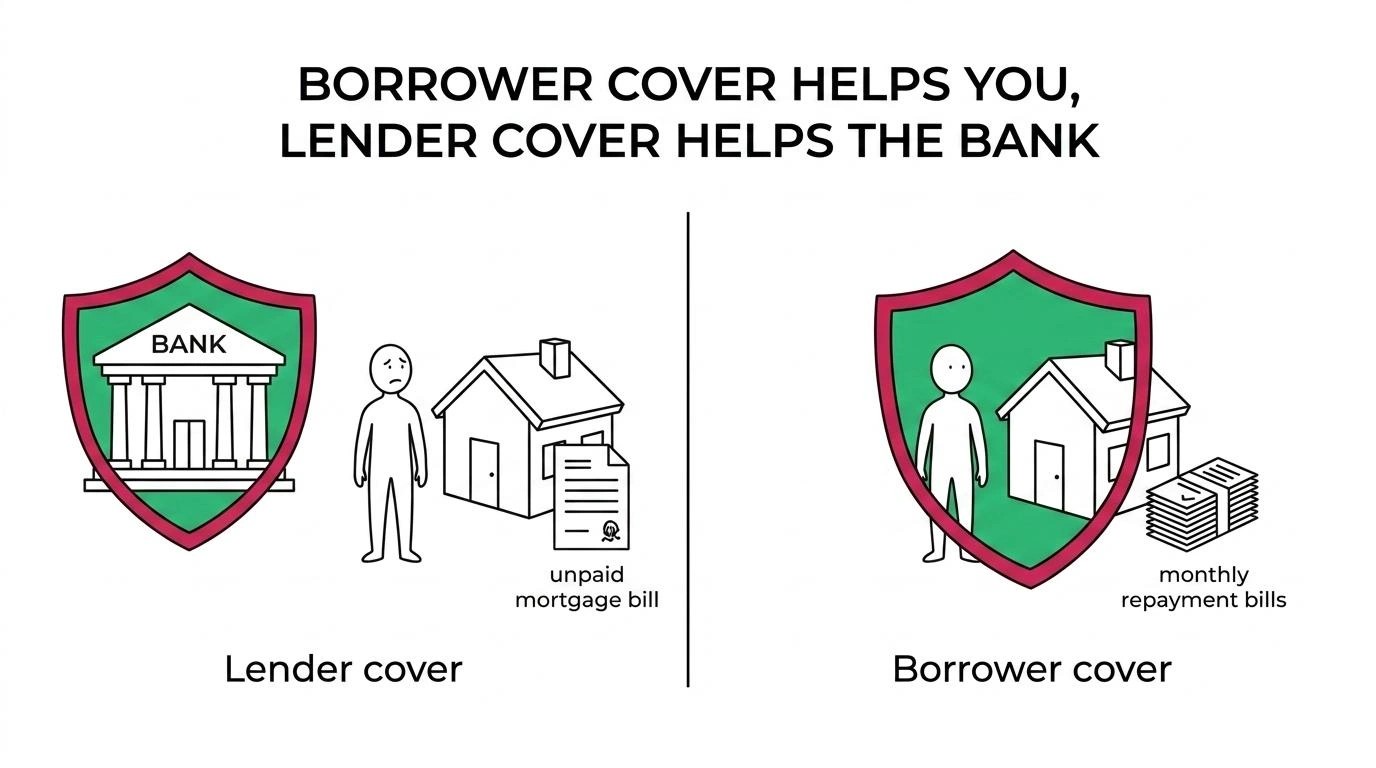
Mortgage protection insurance, sometimes called mortgage repayment cover, can help with monthly repayments if you are unable to work because of illness, injury, or in some cases involuntary redundancy. The purpose is to help you keep the home.
A low equity margin is a type of insurance charged by the lender if you have less than a 20% deposit. It is based on the loan amount, not the purchase price. This premium is added to your mortgage and paid by you as part of your repayments.
If your circumstances change, you default on your mortgage, and the property is subsequently foreclosed upon and sold, this insurance policy covers any difference owed to the bank. It does not pay benefits to you or your family.
Some banks also call this lender’s mortgage insurance, which is the more common name in Australia.
Insurance required for a mortgage in New Zealand
For most New Zealand home loans, the only insurance that is usually required by the lender is building insurance. The bank wants to know that the physical asset securing the loan is insured against events like fire, storm, or major damage.
That does not mean another cover is unhelpful. It only means the bank does not force you to buy it as a loan condition.
Common mortgage-related insurance needs include:
- Building insurance on the secured property for freestanding homes
- Body corporate building cover for many apartments and some townhouses
- Life insurance
- Mortgage protection or income protection cover
- Trauma cover
- Contents insurance
If you own a freestanding home, building insurance is arranged by you. If you own an apartment or unit under a body corporate, the building itself may be insured through body corporate levies, though you may still need your own contents and liability cover.
A good way to think about it is this: required insurance protects the lender’s security, while optional insurance protects your cash flow, family, and longer-term plans.
What mortgage protection insurance usually covers
Mortgage protection insurance is mainly about keeping repayments going when work income stops. It is often structured as a monthly benefit rather than a lump sum.
If you are unable to work because of illness or injury, the policy may pay a set amount each month after a waiting period. Some policies also include redundancy or unemployment cover, though terms can be tighter and benefit periods shorter.
The cover is usually linked to affordability, not just to the size of the mortgage. That means the insurer may cap the benefit based on your income, the repayment amount, or both.
Mortgage protection features include:
- Illness or injury: monthly payments after a stand-down period if you cannot work
- Redundancy cover: limited temporary payments if involuntary job loss is included
- Benefit periods: cover often runs for a set time, not indefinitely
- Policy limits: caps, exclusions, and underwriting conditions can shape what is actually claimable
Policy wording matters a lot here. Pre-existing medical conditions may be excluded or loaded.
Voluntary resignation is generally not treated as redundancy. Self-employed borrowers may find unemployment-style cover is limited or unavailable, because there is no standard employer redundancy event to point to.
This is why mortgage protection insurance should never be chosen on the product name alone. Two policies with similar labels can behave very differently at claim time. Talk to our experienced insurance advisers about what’s right for your situation.
Other insurance options that can support mortgage repayments
Mortgage protection insurance is only one piece of the picture. In many households, another type of policy will do a better job. It depends on whether the biggest risk is death, illness, injury, permanent disability, job loss, or unstable business income.
Life insurance for mortgage debt after death
Life insurance is often the cleanest way to protect a mortgage if one borrower dies. A lump sum can be used to clear some or all of the home loan, which can remove pressure on the surviving partner or family.
For some people, matching life cover to the loan balance is enough. For others, the better number is higher, because the family may still need money for children, schooling, living costs, and time off work.
Mortgage life insurance is a term sometimes used for life cover linked to a home loan. In practice, many people simply use term life insurance and set the cover amount to reflect the debt and household needs.
Income protection insurance for mortgage repayments during illness or injury
Income protection is broader than mortgage protection insurance. Rather than only focusing on the home loan, it is designed to replace part of your income if sickness or injury stops you working.
That can be powerful if your budget pressure is not just the mortgage. Rates, groceries, childcare, utilities, and transport keep going too. A policy that only pays the mortgage may still leave a gap.
For households with large fixed expenses, income protection can offer more flexibility than mortgage-only cover.
Trauma, disability and redundancy cover for mortgage pressure
Trauma insurance pays a lump sum on diagnosis of a specified serious illness, which can include conditions like cancer, heart attack, or stroke depending on the policy wording. That money can be used however you choose, including reducing debt or creating breathing space while treatment happens.
Total and permanent disability cover is aimed at more serious, lasting change. If returning to work is unlikely, a lump sum can help repay debt and fund a major reset of the household finances.
Redundancy cover can help in a very specific scenario: you are well enough to work, but your job disappears. It can be useful, though it usually comes with waiting periods, payment limits, and clear exclusions.
ACC cover for self-employed mortgage holders
For self-employed borrowers, ACC can be a major part of the mortgage safety net after an accident, but it does not cover illness and it may not fully replace usual earnings. That means many business owners need a more layered plan, with ACC reviewed properly and private insurance filling the gaps. For more information, read our guide to income protection insurance for self employed.
Choosing mortgage cover that matches your risk
The right cover depends less on the mortgage itself and more on how your household earns, spends, and absorbs shocks.
A single-income family with young children may prioritise life and income protection. A dual-income couple with strong savings may need less. A self-employed borrower may focus heavily on accident, illness, and business interruption risks. An investor may want to protect both personal living costs and property-related commitments.
Before choosing a policy, it helps to look at a few core questions, and chat to an insurance adviser. Consider:
- How long could you self-fund repayments: emergency savings change how much insurance you need
- Who depends on your income: one partner, children, or ageing parents all raise the stakes
- What event worries you most: death, disability, illness, redundancy, or cash flow swings
- How stable is your work: salary, contracting, business ownership, and commission income carry different risks
The strongest plans are usually built around the weak point in the household budget, not around whichever policy name sounds familiar.
Tax Implications of Mortgage Insurance
In New Zealand, premiums for personal mortgage protection or life insurance are generally not tax-deductible, and claim payouts are usually tax-free. However, if you have income protection insurance, the premiums may be tax-deductible, and any benefits paid are treated as taxable income. Always check with a tax adviser or Inland Revenue for your specific situation.
Common Misconceptions About Mortgage Insurance
- The bank’s insurance protects you: In reality, a low equity margin, or lender’s mortgage insurance protects the bank, not you. Even though you pay the premium.
- All mortgage insurance covers redundancy: Many policies exclude redundancy or have strict conditions.
- Mortgage insurance is always required: In New Zealand, only building insurance is usually mandatory.
The Claims Process: What to Expect
To make a claim, you’ll need to provide documentation such as medical certificates or proof of redundancy. The insurer will assess your claim, which may take several weeks. Keep records and communicate promptly to avoid delays.
The Role of Insurance Advisers and How to Get Advice
Insurance advisers can help you understand your options, compare policies, and tailor cover to your needs. In New Zealand, advisers are regulated and must act in your best interests
Property investors may need landlord insurance, which can cover loss of rental income, tenant damage, and liability. Mortgage protection and income protection can also be relevant if rental income is vital for mortgage repayments.
If you’d like to chat further about your insurance needs, get in touch with Matt Willoughby today for a no obligation chat. Call the office on 021 022 17130 or complete our form below and we’ll be in touch.